Honoring Jackie Robinson Breaking the Color Line
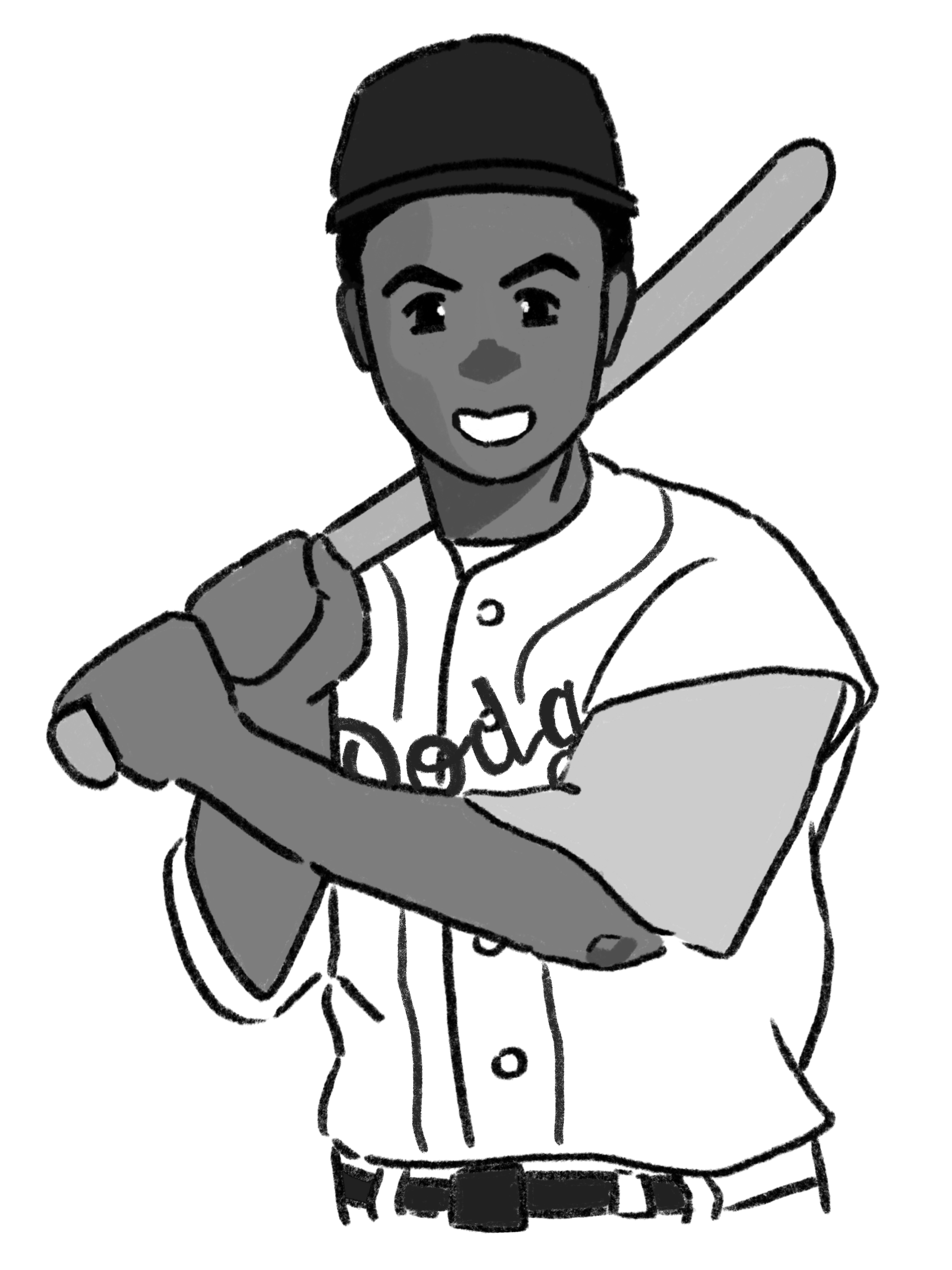
Image by Mimi Doyle ‘26
26,623 fans packed Ebbets Field in Brooklyn, New York, on April 15, 1947. It was the Boston Braves against the Brooklyn Dodgers. The game was a close one, with both teams playing well. The game's tide changed in the seventh inning when a sacrifice bunt led to a Braves' throwing error, putting the Dodgers in the lead. The Dodgers took full advantage of this situation, scoring a 5-3 victory against the Braves. The game itself was not incredibly distinctive when it came to personal showings or wow plays. Yet, it has earned itself one of the most memorable ones within baseball's past on the behalf of one man's introduction: Jackie Robinson. Most historians have termed this as an occurrence of the color line breaking of baseball, in which Robinson was the first black American MLB baseball player. This game, and every other that Robinson played during his professional life with the MLB, was a giant step towards racial integration within the nation.
Baseball has been extremely popular in the United States for many years. It developed from bat-and-ball games in the early 19th century, and the Knickerbocker Rules of 1845 set the foundation for modern play. The first known competitive game under these rules was played in 1846 in Hoboken, New Jersey. Professional leagues had emerged by the close of the 19th century, from Red Socks to Giants–Major League Baseball was a hit and a force to be reckoned with as a cultural force, becoming America's favorite pastime. However, racial segregation excluded African American players from participating, and so the Negro Leagues were formed in 1920.
In the mid-1940s, a man named Branch Rickey was tired of the segregation of American sports and was determined to break this barrier. Rickey was the president and general manager of the Brooklyn Dodgers and recognized the injustices African Americans faced in sports. He understood that the integration of baseball could be a giant leap for racial equality in American life. The chance Rickey was hoping for came when Kenesaw Mountain Landis, the MLB commissioner infamous for his staunch segregationist policy, died. Rickey saw this as an opening to proceed with his plan, so he conducted an extensive search, sending scouts, reading reports, and talking with sportswriters to find the most suitable candidate. This thorough process led Rickey to Jackie Robinson, a multi-sport star at UCLA who had played in California's more tolerant racial climate and had experience playing on integrated teams.
Born in Cairo, Georgia, Jack Roosevelt Robinson always loved to play sports. He was the youngest among five children, born to sharecroppers Jerry and Mallie Robinson. His father left home, and so his mother and her five children went to Pasadena, California, in 1920 in search of better opportunities. He was raised in Pasadena and played various sports at John Muir High School, then Pasadena Junior College, and UCLA, where he became the first four-sport letter winner in the university's history. His good character and athletic ability later led him to serve in the U.S. Army during World War II and subsequently play in the Negro Leagues.
Robinson's success as baseball's first African American player was honored with awards such as Rookie of the Year in 1947 and National League MVP in 1949, paving the way to racial integration in America's game. Robinson's influence went beyond the playing field; he was a prominent voice in the civil rights movement, using his status to struggle for equality and justice. His legacy is honored each year on April 15, Jackie Robinson Day, where all of MLB wears his legendary number 42. The official retirement of his number by all MLB clubs and posthumous honors such as the Presidential Medal of Freedom and Congressional Gold Medal are testaments to the permanently standing tributes of the enormity of Robinson's impact on sports and society.