Customs and Calaveras: Día de Los Muertos
Bridging the gap between the living and the deceased, Dia de Los Muertos, or Day of the Dead, is deeply ingrained in Latin American and Hispanic culture. However, did you know Indigenous peoples had their own celebration of the dead before Spanish colonization?
Pre-colonization, the Aztec empire and other Mesoamerican groups celebrated the goddess of death, Mictecacihuatl, believed to oversee Mictlán, the land of the dead. Instead of a one-day celebration, the Aztecs held a month-long festival filled with feasting and dancing to remember the deceased. Similar to present-day, the Aztecs adorned altars with food and drink to commemorate their families.
During the Spanish conquest, indigenous religions were largely repressed as conquistadors forced the adoption of Catholicism. Through colonization, the Spanish traditions of All Saints’ Day and All Souls’ Day combined with indigenous celebrations,shortening the month’s festival to two days. Traditionally, the Spanish celebrated the two days with a Catholic feast, grave decoration, and cemetery visits. However, the indigenous incorporated many of their festivities into the holiday, such as adorning altars with offerings and dance performances.
PC: Unsplash
In the current day, Latin America celebrates the holiday in various ways, with each country holding vastly different traditions. Instead of the Mexican traditions of wearing costumes, holding parades, and creating altars, Colombia observes a more traditional Spanish version, placing flowers on graves and feasting. In Ecuador and Peru, “t’anta wawa”, which translates to “bread baby”, symbolizes the cycle of life and death in their version of the holiday, Dia de Los Difuntos.
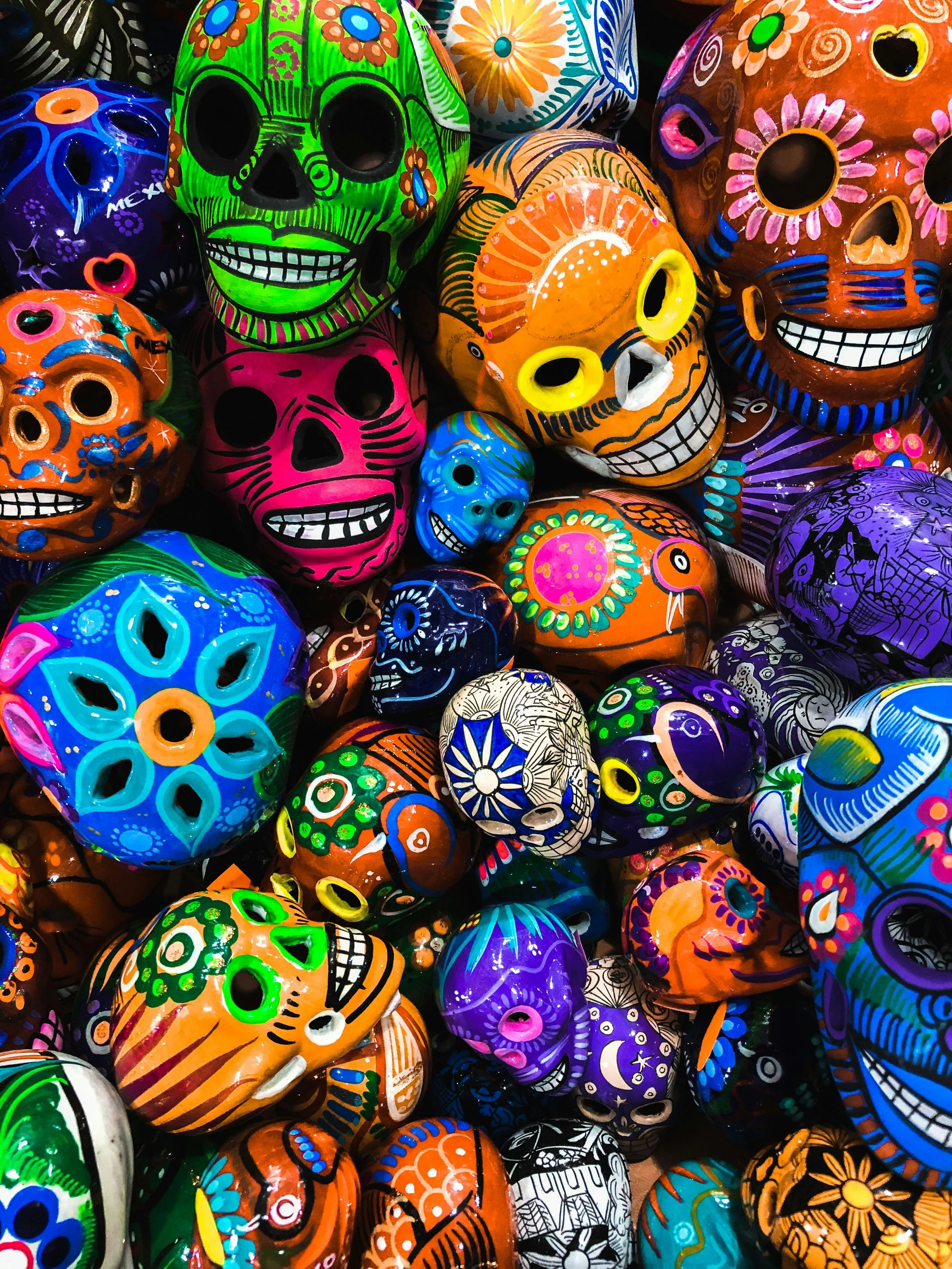
Though separate holidays, Dia de Los Muertos has been confused with Halloween due to their shared imagery of skulls and skeletons. The 1970s Chicano movement sought to change this, bringing the holiday to a larger community level through public altars and art installations. Promoting their indigenous roots, the holiday took form as a symbol of Chicano pride.
As Dia de Los Muertos became more popular, Disney adapted the holiday into “Coco.” While the film inaccurately depicted the necessity of photographs being required to cross over, as traditionally, remembrance is enough, representations like these in mainstream media have allowed the holiday to be recognized on a larger scale. In conjunction with the release of “Coco,” Disney added a Dia de Los Muertos holiday tribute to their parks.
Dia de Los Muertos has taken many shapes throughout time, however, the most important theme of family has never been lost. Keeping the memory of the deceased alive, no matter how much time has passed, will forever keep the holiday in the hearts of many.