
The Light of Diwali
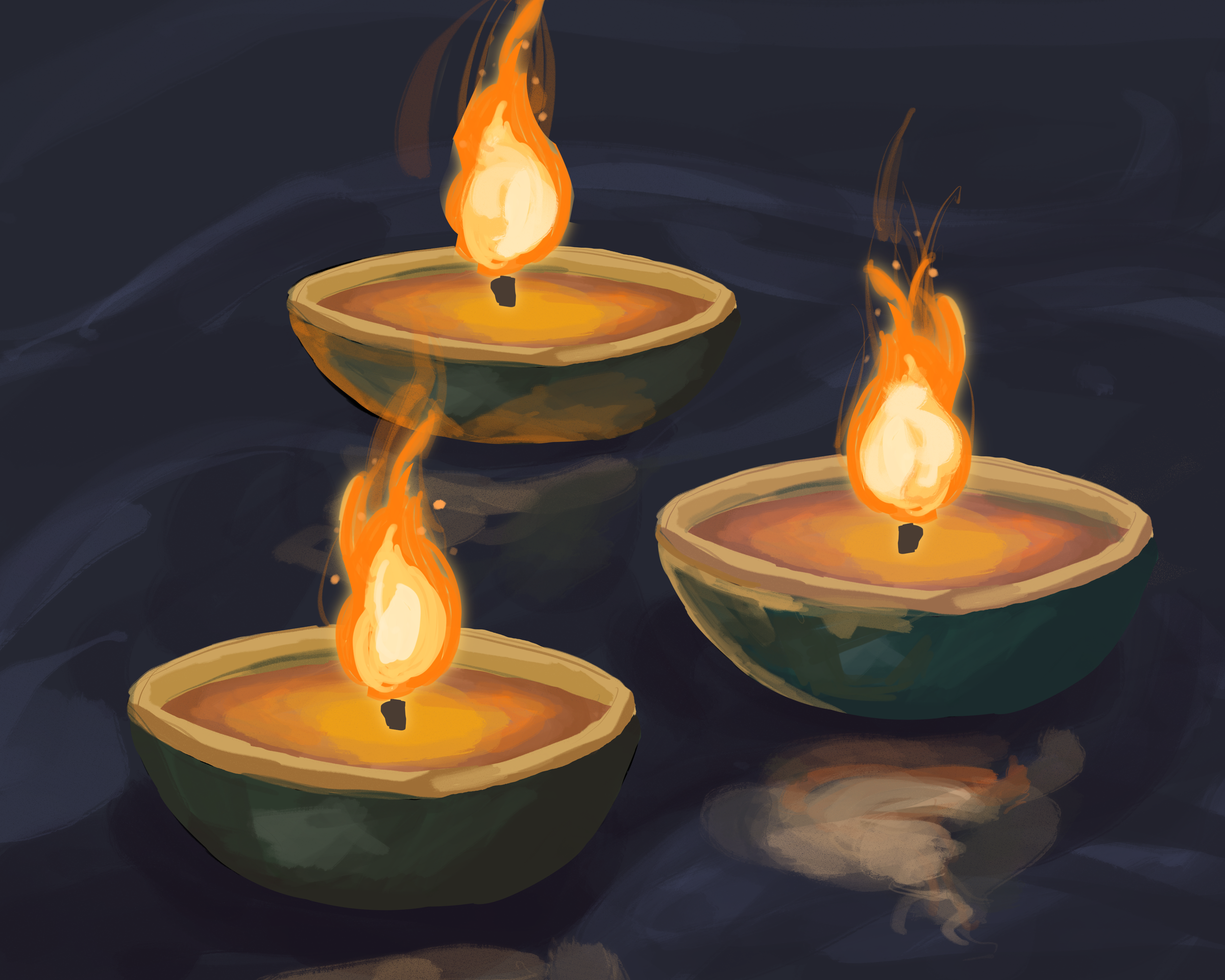
PC: Isabella Nguyen ‘28
Nearing the end of Fall, we start to approach the festival of light. A classic Hindu festival that lights up the night, just like it did for Lord Rama on his return home after 14 years of exile along with his wife, Sita Devi, and his brother Lakshmana. The cultural myth begins here when Lord Rama, preparing to be the next ruler, gets unfairly exiled from the kingdom one day. He then finds out his wife Sita gets kidnapped by Ravana, the King of Demons, who has fallen in love with her. Hearing this, Lord Rama sets out on a journey, along with his brother, to rescue her. As they start traveling on their journey, they arrive upon a kingdom of monkeys. They then befriend the king, King Hanuman, who then decides to help them. After learning that Ravana took Sita to his island kingdom of Lanka, they seize an army of monkeys to come with them to help. When they arrive, they defeat Ravana and the demons, successfully freeing Sita. The happy couple then starts their descent home. The people of Ayodhya leave lights on their doorsteps to help Lord Rama and the others find their way home, therefore creating the tradition we know today as Diwali.
However, this is just the Hindu version of Diwali. Different cultures have different stories for Diwali, such as Jainism, Sikhism, and even Buddhism. In Jainism, Diwali is the celebration for Lord Mahavira, one of the greatest Jain teachers, attaining nirvana, which is a state of no suffering and the end goal of Jainism. In Sikhism, Diwali is celebrated as Bandi Chhor Divas, their day of liberation in order to honor their sixth Guru, Guru Hargobind, and 52 other princes, from a 12-year imprisonment set by their Emperor Jahangir. In Buddhism, the celebration of Diwali is because some Buddhists, particularly the Newar ones in Nepal, celebrate the day, as Emperor Ashok converted to Buddhism in the third century BCE.
No matter the meaning, Diwali is a day to look forward to. In the year 2025, Diwali is approaching on Tuesday, October 21, 2025. It falls on this day because the date is set by the festival timing, which is based on the Hindu lunisolar calendar. The Hindu Calendar is lunisolar, meaning it revolves around the Moon’s cycles and the Sun’s position. As Diwali 202 approaches, may we light our diyas and place them on our doorstep as a reminder to spread kindness, love, and peace.