
When elite universities, such as ivy-league schools or T25s, pitch their institutions to prospective students, they promise a unique education as well as a safe and supportive community for their respective students. But behind the fancy reparations, there is a frustrating truth. When serious sexual violence happens on these campuses, these schools frequently protect their own reputations and well-connected students, instead of holding the perpetrators accountable and bringing victims justice.
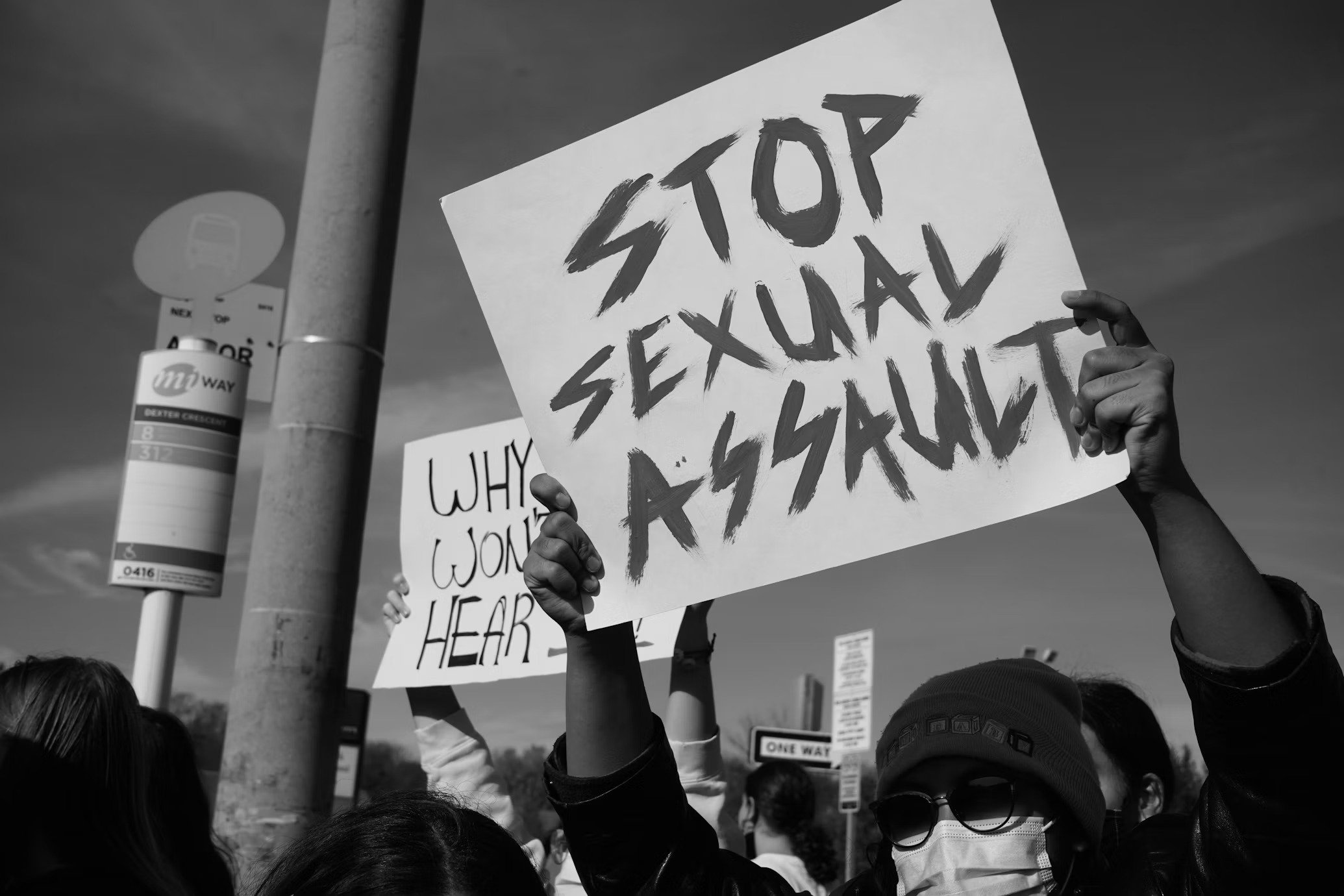
PC: Unsplash; Protester holds a “stop sexual assault” sign
This issue made national headlines this year with the infamous “Cornell 7” case. In 2024, a female student, “Jane Doe”, reported that she was drugged and gang-raped by 7 fraternity members. In Sep. 2026, she filed a civil lawsuit against these men and Cornell University. Despite how severe these allegations were, the university’s response was to expel just two of the seven men responsible; another two were suspended, one was barred from campus after graduating, and the last two? Given reflection essays as their official punishment. None of these fraternity members have been charged with a crime, despite committing sexual violence toward this female student, leaving “Jane Doe” shattered, degraded and without justice for the assault she faced.
As high schoolers and college students watched these events unfold, this soft punishment was, unfortunately, not much of a surprise. Over the past decade, this frustrating pattern of universities letting perpetrators walk away without consequences has been seen across the country.
In 2015, at Stanford University, Chanel Miller was sexually assaulted by varsity swimmer Brock Turner. Instead of being expelled or convicted of his crimes, the only consequence Turner faced was being able to voluntarily withdraw from Stanford; there wasn’t even an expulsion on his record. The same year at Stanford, a football player accused of rape from a female student was allowed to walk away scot-free. The Stanford panel (determining if a student will be expelled for committing sexual violence) was composed of five faculty and students who found him guilty with a 3:2 ratio; however, at Stanford, the requirement was a 4:1 ratio in order for an expulsion. This athlete was not only allowed to remain as a student, but he stayed as a player on the football team. Instead, the female student who was assaulted ended up leaving the school herself just to get space away from her assaulter.
Across the country at Columbia University, student activist Emma Sulkowicz gained international attention in 2014 by carrying her mattress across campus as a protest after Columbia found her rapist “not responsible” for assault. He was found not guilty at a Title IX hearing, a formal proceeding at a college or university that determines if someone is responsible for sexual harassment or assault, and was allowed to attend graduation alongside Sulkowicz.
These women’s stories are part of the broader issue of injustice that students constantly face. According to the Association of American Universities campus survey, in 2019, over 13% of undergraduate students had experienced sexual misconduct during college, and this percentage only increases with the reporting that 1 in 4 undergraduate women are victims of sexual violence. Not only this, but fewer than 5% of these complaints resulted in a permanent expulsion. Most end in private reprimands, minor probations or no consequences at all.
When some of the worst consequences on University campuses for committing sexual assault is a reflective essay or a temporary break from campus, perpetrators fall under the reassurance that their status shields them. Meanwhile, survivors are not only forced to carry their trauma in silence, but can even become social pariahs for narratives that accuse them of “false allegations”. To prevent future cases of sexual violence, there must be real consequences for those at fault, whether it’s mandatory expulsions, contact with law enforcement and/or protection for the victims. Until elite institutions value student safety and justice over protecting their own reputation, the cycle of harm will continue to go unchecked and without justice.
