
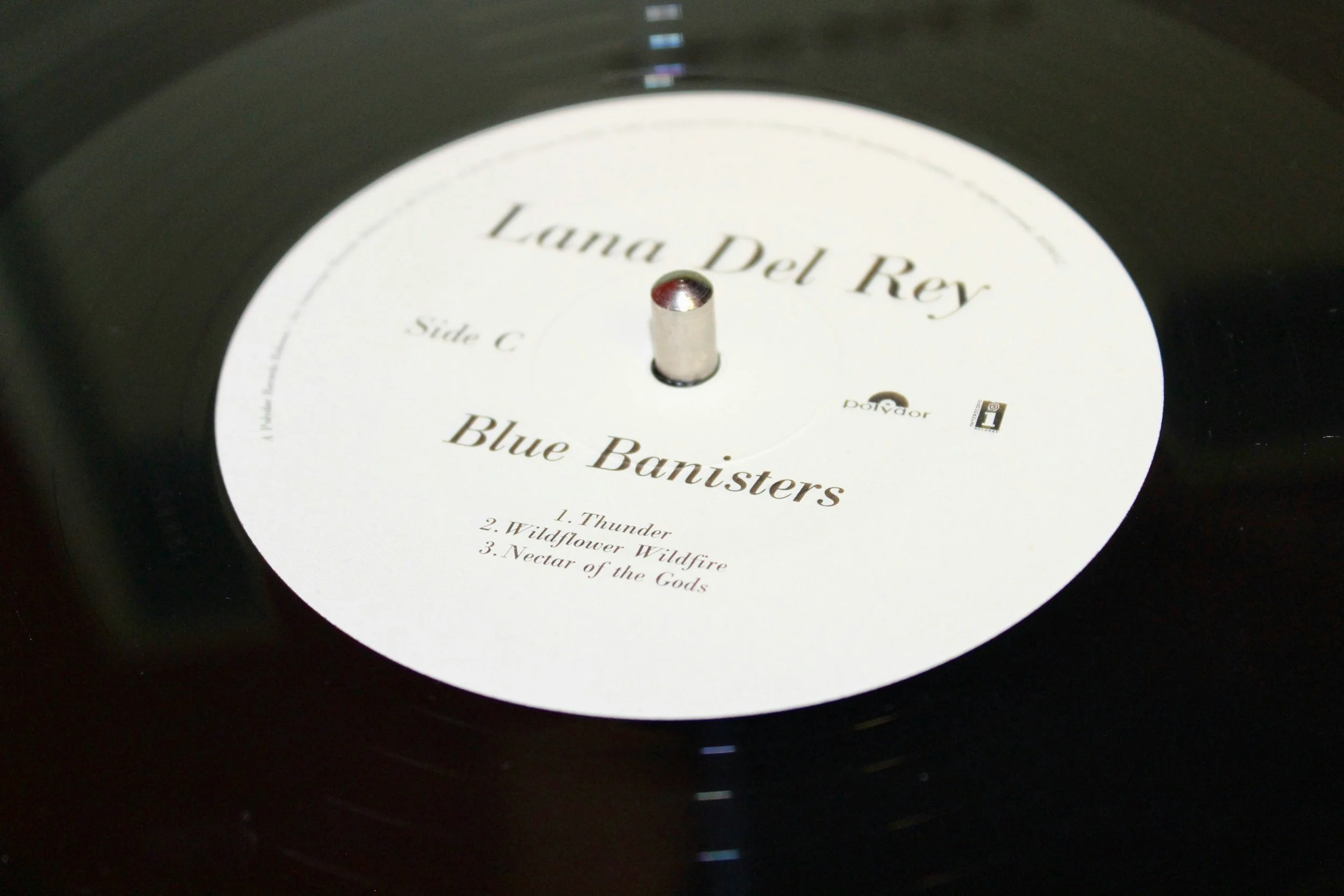
PC: Unsplash; Lana Del Rey’s Blue Banister’s Record
Following the release of Spider-Man: Brand New Day, one particular phenomenon has been pushed into the internet’s eye: the romanticization of older men. Internet users have been compiling lists of the “most attractive” male celebrities, created edits of Brand New Day’s Jon Bernthal to songs by Lana Del Rey and even made slideshows of male Tinder profiles that fit a specific archetype of person adhering to this culture.
It goes without saying that this type of romanticization is complicated. A large portion of the community creating this culture are teenage girls – a fact that cannot go unnoticed when talking about these age-gap relationships. In many cases, the male in the relationship will be upwards of 10-15 years older than the woman, creating a dynamic that reflects a larger point of societal discourse about relationships as a whole. The complication is not solely the attraction; rather, it’s about what other concepts, such as pedophilia or abuse, are heavily intertwined with the spaces romanticizing these behaviors.
Many online communities circulating a pro-older man ideology are also very closely related to, or coincide with, spaces similarly romanticizing books like Lolita and the concepts behind them. To provide needed context, Lolita was intended as a heavy critique of pedophilic attraction, in which the narrator engages in a years-long inappropriate sexual relationship with his 12-year-old stepdaughter Dolores. Other media commonly consumed in these spaces is that of Lana Del Rey, a singer whose lyrics have reflected a fetishization of older men. In her song “Cola”, she sings, “I got a taste for men who are older / It’s always been, so it’s no surprise.” And videos online that feature her music often use the hashtags: #oldermen or #agegap, containing clips of movies displaying age-gap relationships.
Simple attraction to a certain type of man is not what can be harmful. While some of the people engaging in these preferences are legal adults, it still cultivates a potentially unhealthy goal for those who are not. When actually acting on this attraction, it is a two-way street – a minor may be attracted to a grown adult, but when that attraction is reciprocated, that relationship is inherently unhealthy, and in almost every single case, simply illegal.
There are entire subcommunities on the Internet, primarily in spaces like Twitter, Tumblr or TikTok, that are frequented by extremely young women with these values. Some videos feature #LanaDelRey with the caption, “How seeing an older man feels like without a rat in your ear telling you it’s sick.” It includes visual clips of young women living their lives to the fullest, the sun shining down upon them as they feel the wind in their hair.
It’s also impossible to discuss these communities without addressing how they come about in the first place. Many videos with these tags or with these audios are critical of the romanticization of an older man, acknowledging the harm by placing a sad song with the caption, “How I felt talking to an older man at 15-16.” Another, with the tag #agegap, writes, “I always lean towards older and more fatherly guys because I always hope that they’ll give me the love that my dad never did.” The internet has been a space for people to cope with past or present trauma nearly since its birth; the motivations behind sharing these emotions in their respective spaces are not new.
Criticizing an unhealthy romanticization of older men is disrespectful without also acknowledging the context behind these posts. While yes, many age-gap relationships are implicitly harmful, internet romanticization of harmful tropes has not and will not stop any time soon; rather than attack those who are part of these communities, it is a much more restorative effort to have open communication about trauma that could have motivated these feelings instead. This phenomenon, like every other, has nuances that should not be ignored – educating people on healthy methods of coping is what should be prioritized, rather than simply criticizing them at face value.