
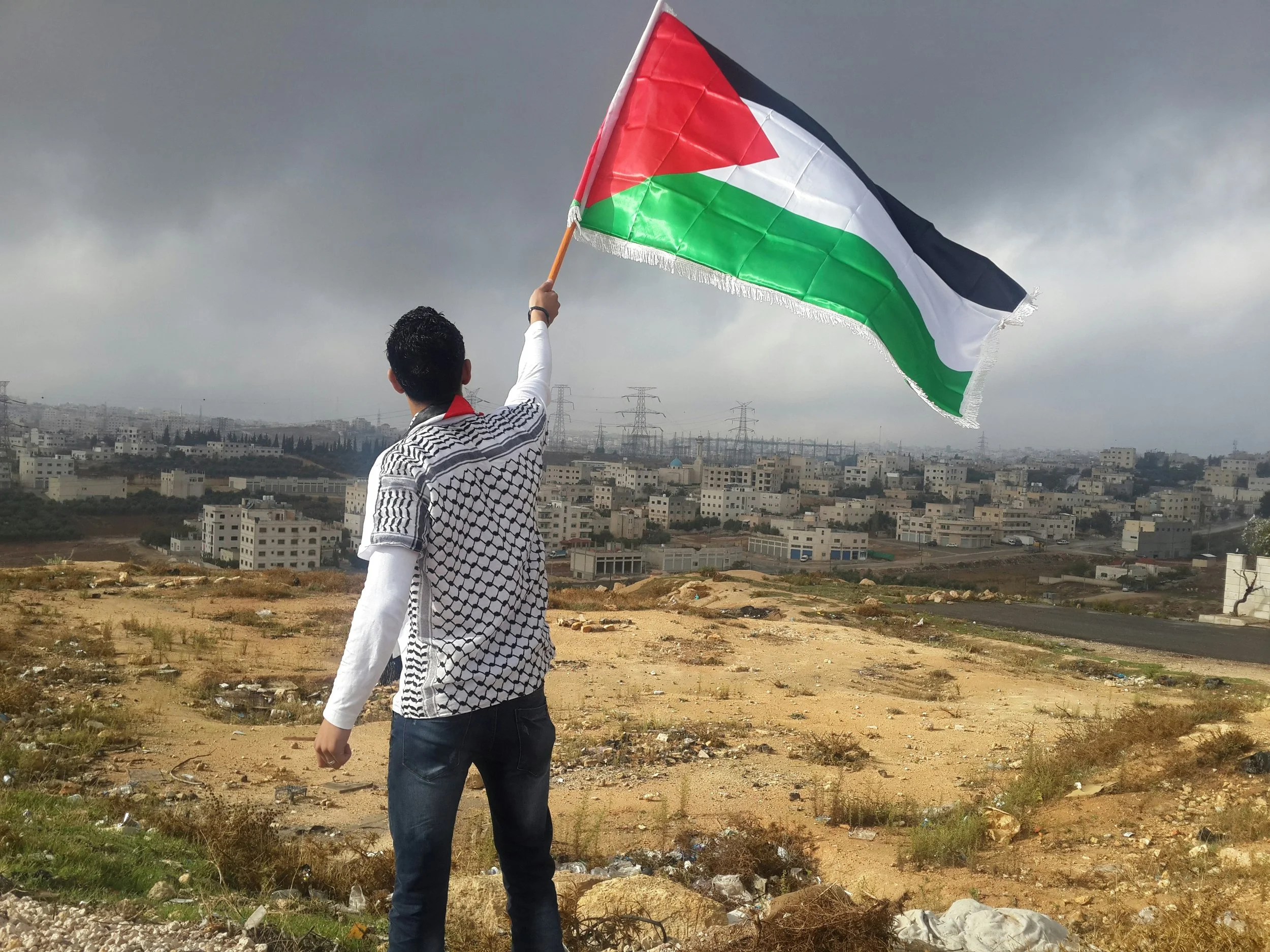
image from Unsplash
“Colonizers write about flowers.
I tell you about children throwing rocks at Israeli tanks
seconds before becoming daisies.
I want to be like those poets who care about the moon.
Palestinians don’t see the moon from jail cells and prisons.
It’s so beautiful, the moon.
They’re so beautiful, the flowers.”
excerpted from F**k Your Lecture on Craft, My People Are Dying by Noor Hindi
There are countless long-term side effects to famine and malnutrition. They include a weakened immune system, making one more vulnerable to disease, increased risk of conditions like diabetes, heart disease, and obesity, and permanently impaired cognitive functioning. It also puts those afflicted at greater risk of mental health issues: anxiety, depression, mental illnesses like schizophrenia, and more. There are generational effects to going hungry, ones that every person in the Gaza Strip may experience even long after being supplied with food again. The experiences of Palestinians in Gaza will not be forgotten by their bodies, and the legacy of the genocide currently occurring will remain throughout future history.
For many people, Gaza represents the histories and struggles of their own communities and cultures. Inflicted suffering of a certain group by a larger, more powerful foreign entity is nothing new in history, reflected in the genocide of Indigenous peoples throughout North and South America, violent occupations of Korea and China by Japan in the 20th century, former United States intervention in Latin American countries, the British Raj in India, and the current Russian occupation of Crimea and parts of Ukraine. Despite this, however, there’s little widespread recognition of how Israel’s actions contribute to this historical pattern of imperialism. The overwhelming worldwide support for the nation established a clear advantage on its part, yet there didn’t seem to be a collective awareness of the nation’s immense power over the Gaza Strip and the lives of its residents. People didn’t realize that Israel has enough power to completely devastate Palestine, which can’t retaliate sufficiently - and it was using it. The humanitarian conditions in Gaza have reached a critical peak after 21 months of ruthless violence enacted by Israel, and people are just starting to wake up to the reality.
The United States, the United Kingdom, and France have all been countries that have supported Israel throughout the past 2 years and before, supplying the nation with weapons, military supplies, funding, and ensuring consistent collaboration with Israel, keeping its economy fruitful. However, in the past few weeks, governments of each country have made statements condemning the conditions of Israel’s man-made starvation in Gaza, a surprising change of tune for many officials. Among them are American president Donald Trump, Georgia representative Marjorie Taylor Greene, and French president Emmanuel Macron (though the latter has previously condemned Israel’s actions). Trump and Taylor Greene both emphasized the horrificness of Gaza’s condition and called for humanitarian action to be taken soon, with Taylor Greene posting on X, “It’s the most truthful and easiest thing to say that Oct 7th in Israel was horrific and all hostages must be returned, but so is the genocide, humanitarian crisis, and starvation happening in Gaza.” This made the representative the first Republican to describe Israel’s violence as a genocide. On July 24, Macron announced that France would recognize a sovereign Palestinian state, with British prime minister Keir Starmer stating similar plans for the UK’s future the following week. These criticisms and actions mark the turning of tides in Western politics, but what has changed?
The question goes both ways. People in Gaza have been enduring the unbearable since even before October 2023, with hardly any breaks to the violence and suffering that has marked their everyday lives. Bombings, shootings, prevention of aid and care, chemical warfare - the list of intolerable, horrific atrocities committed by Israel goes on, and yet this is the first time many leading officials have even spoken criticism of any kind towards Israel, especially in the United States. The line seems to be drawn at complete starvation, the kind that apparently cannot be ignored. But what has been previously ignored makes these acknowledgements of Palestinian suffering futile. There is no acknowledgment of Palestinian endurance, there have been no apologies or tangible actions taken, which brings back the question of “what changed?”. What changes now? What will happen in order to stop the Israeli government’s cruelty and ensure aid and care for Gazans? The recognition of Palestine as a state is a powerful move, but it is solely symbolic - it has no real-world significance or action going along with it. Many of these nations helped build the genocide themselves. When cycles of violence and abuse have been economically supported and socially hailed the way they’ve been in Palestine, it takes resistance and intention to fight back and set things right. The future can still hold hope for the people of Gaza, but it can only manifest itself if it’s kept alive by actions, by people who care and speak out. The fight for Palestine and what is stands for is far from over. The only difference is now, it requires more urgency and strength than ever before.
Sources/Further Reading:
The Medical Consequences of Starvation | TIME
The Malnutrition Crisis in Gaza Will Outlive the War, Experts Warn | TIME
The grim reality of Gaza's hunger crisis appears to be shifting U.S. public opinion
Macron scores rare win on Palestinian state recognition
Starmer says UK will recognize Palestinian state unless Israel agrees ceasefire, ends Gaza suffering