
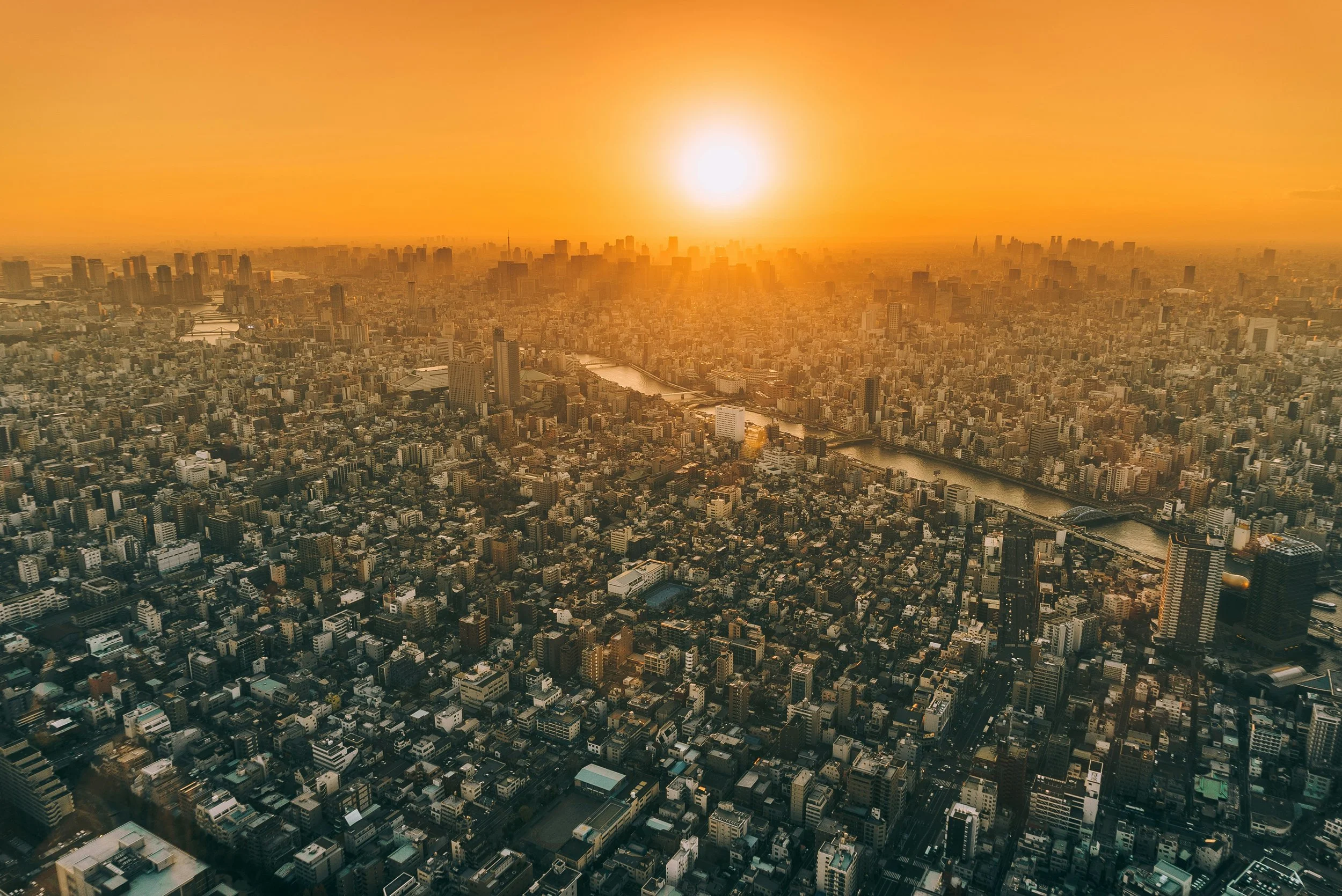
PC: Unsplash; A bird’s eye view of an urban skyline
Climate change and pollution have become major challenges for urban cities, affecting the daily lives of millions of people living in bustling cities. As these cities continue to grow, the increasing number of cars, factories, buildings, and other human activities contributes to greenhouse gas emissions and air pollution. These problems have made urban areas more vulnerable to rising temperatures, extreme weather and environmental damage.
One major effect of climate change on urban cities is the urban heat island effect. This happens when buildings, roads and sidewalks absorb and trap heat, making those sections warmer than surrounding rural areas. The lack of trees and green spaces makes this problem worse because of the lack of shade and plants to cool the environment. As temperatures rise, people can experience heat exhaustion and overuse of air conditioning, using more electricity and contributing to additional greenhouse gas emissions when the energy comes from fossil fuels.
Pollution is another serious problem in urban areas. Cars, buses, factories, and construction sites release pollutants into the air, which can make it difficult for people to breathe clean air. Long-term exposure to air pollution can contribute to asthma, lung disease and other health problems. Water pollution is also common when trash, chemicals and oil enter rivers, lakes, and storm drains. This harms aquatic ecosystems and can contaminate water supplies. Additionally, plastic waste and litter can clog drainage systems, increasing the risk of flooding during heavy rainfall.
Climate change also increases the risk of extreme weather events, including heat waves, intense storms and flooding. Rising sea levels threaten coastal cities, while heavy rainfall can damage roads, homes, public transportation, and other important infrastructure. These disasters can disrupt businesses, schools and transportation systems, making everyday life more difficult for residents.
However, cities can take steps to reduce these effects. Planting more trees, creating parks, improving public transportation and encouraging walking and biking can help reduce pollution and lower urban temperatures. Cities can also invest in renewable energy, energy-efficient buildings and better waste management systems.
In conclusion, climate change and pollution create serious environmental, economic, and health challenges for urban cities. By making sustainable choices and investing in greener infrastructure, cities can reduce their environmental impact, protect public health and create healthier places for future generations to live.