
Tools for School: Alternatives to Using AI
Since being launched in 2022, the artificial intelligence (AI) generative pre-trained transformer (GPT), ChatGPT has boomed in its popularity and usage. Its potential as a tool for school, work, and personal projects is essentially endless: you can use it as a search engine, have it edit a paper for you, or ask it specific questions you can’t find the answer to anywhere else. However, with the rise of its benefits there has come the even greater cost of its disadvantages. In schools ranging from middle school to beyond the college level, students have been using the model to write entire papers, do entire assignments, and generally create shortcuts for learning. Though these shortcuts may save time and energy, it’s important to understand that using AI models in learning can have negative effects on the one using it. Here are some alternatives to the allure of ChatGPT that provide just as much information and though they may be less convenient, they’re enriching and powerful alternatives based on knowledge, a stark contrast to ChatGPT’s artificially generated, and often lacking, responses.
Wolfram Alpha was launched in 2006 as an answer engine, similar to a search engine like Google or Yahoo but more oriented towards data, analyses, and computations. It draws upon data from outside primary sources and its own algorithms to answer questions ranging from topics of math and science to global politics and pop culture. As a tool for schoolwork, Wolfram Alpha is especially useful in math and science, with a math keyboard to input equations, step-by-step instructions, and visualizations of any concept you can think of. In general, it’s an incredibly interesting and versatile resource that is perfectly geared for collecting information concisely, quickly, and helpfully.
Though this might seem completely obvious to most readers, Wikipedia is important to include even if just to emphasize its accessibility and the vast knowledge it holds. It’s easy to forget the exciting fact that Wikipedia is a completely free way to access information about anything, from the most simple to most complex ideas. From a young age, many of us are taught not to use Wikipedia due to the danger of misinformation– but this is a major issue with using AI as well. Additionally, when using Wikipedia, often there are citations for the information displayed, links that can lead you to more information or a citation you can actually use for a school project or something similar. Wikipedia is fun to peruse on your own time, too, making it easy to pick up quick facts or do a deep dive on a topic you’re already familiar with. It’s easily the Internet’s largest rabbit hole of information, with everything to offer those who know where to look.
FreeMediaHeckYeah is exactly what it sounds like: a database of free media available on the Internet. It features links to outside websites that host free media like books, movies & TV, educational resources, games, music, and more, with reviews and information for each one. Though there are links to AI models on the site, it’s just one part of it – there is so much more to explore. Accessing the site can be helpful to download PDFs of books, whether you’re reading them in school or using them as sources, watch movies and videos, or search for a site to support your learning.
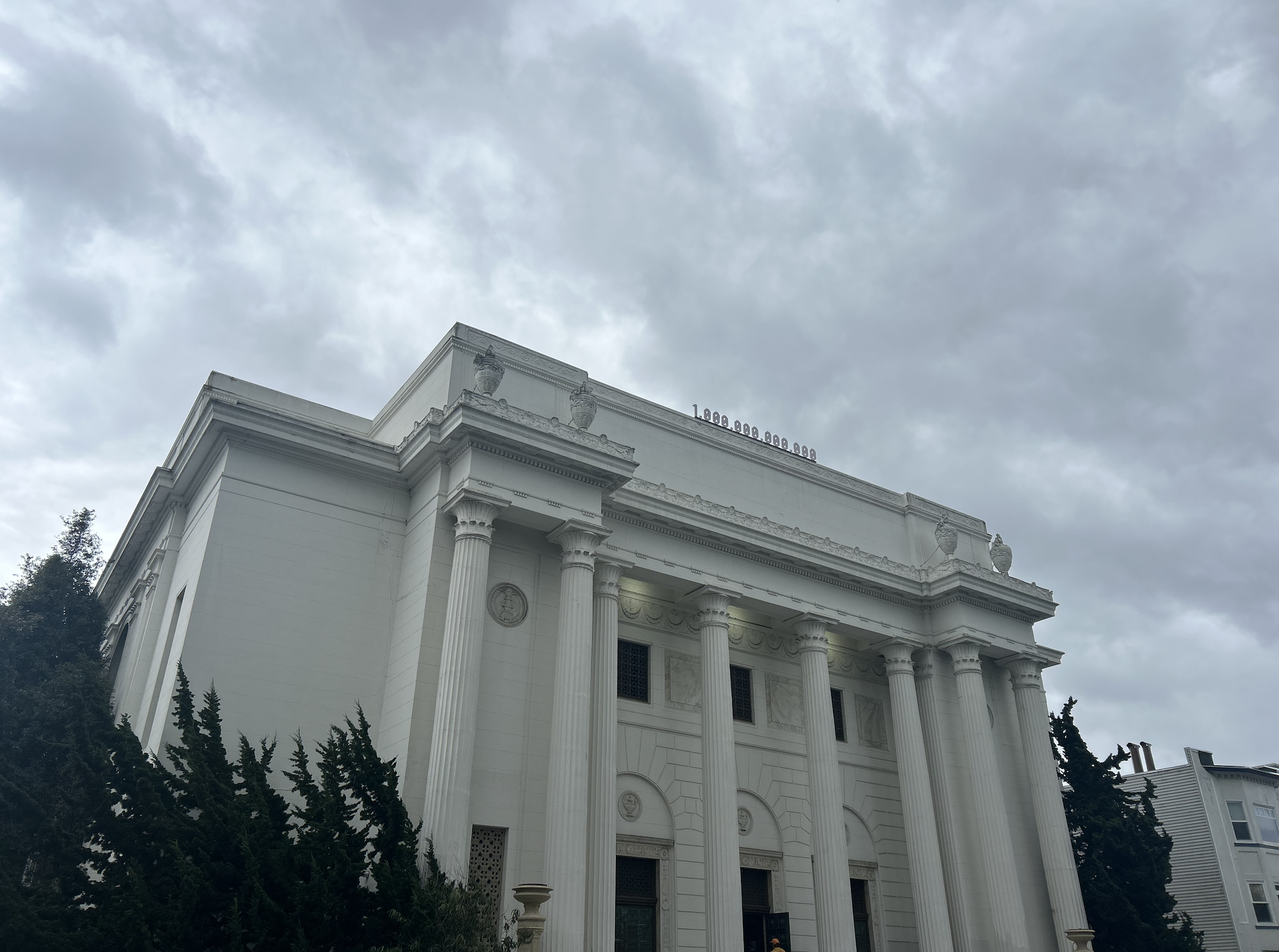
The Internet Archive headquarters in San Francisco (picture by author)
The Internet Archive, a 501(c)(3) nonprofit organization, is the largest collection of Internet media, serving as a digital library that includes millions of archived websites, movies, books, TV shows, and music, all for free and often available to download. It began in 1996, archiving the Internet’s web pages, and has grown massively since then. As a learning resource, it’s another great place to access digital versions of books through its Open Library lending system, easily cite news sources throughout time using its TV News Archive, or browse through the Internet’s timeline on the Wayback Machine. Their work is largely done locally at their headquarters in San Francisco, where they host free tours every Friday at 1 p.m. (easily accessible by public transportation!). It’s a service deeply committed to making knowledge publicly available and easily accessible, an important mission to support through benefitting from their amazing services.